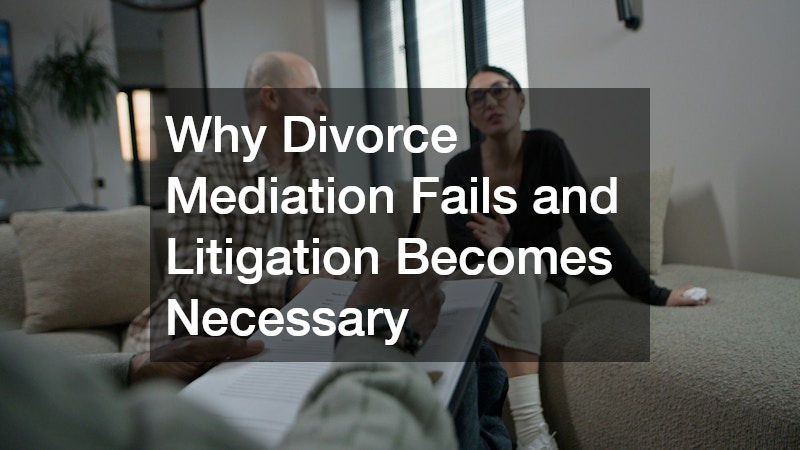
Many couples begin their divorce journey hoping to avoid the stress, cost, and conflict of a courtroom battle. Mediation seems like the perfect solution: calm conversations, a neutral third party, and a chance to part ways amicably. But not every case is suited for this process, and understanding why mediation sometimes breaks down can help you set realistic expectations. If you are researching your options, knowing the warning signs early can save you time, money, and emotional energy.
Unequal Power Dynamics Between Spouses
Mediation depends on both people feeling comfortable speaking honestly and advocating for their own interests. When one spouse has historically controlled finances, decision-making, or communication in the relationship, that imbalance often carries into the mediation room. The less powerful spouse may agree to terms out of fear, exhaustion, or habit rather than genuine consent. This can produce an agreement that looks fair on paper but collapses later when one party feels it was signed under pressure.
A skilled mediator will try to manage these dynamics, but they cannot fully neutralize deep-rooted patterns of control or intimidation. In cases involving a history of domestic abuse or coercive control, mediation is often inappropriate from the start. Recognizing this imbalance early prevents wasted sessions and protects both parties from an unenforceable or resentment-fueled settlement.
Refusal to Disclose Financial Information

Mediation only works when both spouses are transparent about assets, debts, income, and property. When one spouse hides bank accounts, undervalues a business, or refuses to share tax returns, the entire process stalls. Trust is the foundation of any successful negotiation, and financial secrecy destroys it almost immediately.
In situations like this, mediators often have to pause sessions until documentation is provided, which can drag the process out for months. If a spouse continues to withhold information despite repeated requests, the case typically needs to move into a courtroom setting where subpoenas and formal discovery can force disclosure.
- Missing or altered bank statements
- Undisclosed business interests or side income
- Sudden transfers of money to friends or relatives
- Refusal to provide tax returns or pay stubs
- Vague or inconsistent answers about debts
Deep Disagreement Over Child Custody Arrangements
Parenting disputes are among the most emotionally charged issues in any separation, and they are a common reason mediation falls apart. When parents cannot agree on physical custody, decision-making authority, or holiday schedules, sessions can become circular and unproductive. Emotions often run higher when children are involved, making compromise feel impossible even with a patient mediator guiding the conversation.
Family law professionals often see these standoffs escalate when one parent believes the other is unfit or when there are unresolved allegations of neglect. In these cases, a judge may need to review evidence, hear testimony, and issue a binding custody order that mediation simply cannot produce. While no one wants a stranger deciding their parenting schedule, sometimes it becomes the only path forward when both parents refuse to budge.
One Spouse Negotiating in Bad Faith
Not everyone enters mediation with honest intentions. Some spouses use the process to stall, gather information, or appear cooperative for optics while never intending to reach a fair resolution. This can look like repeatedly rescheduling sessions, agreeing to terms and then backing out, or making unreasonable demands designed to frustrate the other party into giving up.
When bad faith becomes a pattern rather than an isolated incident, continuing mediation wastes both time and money. At this point, many people choose to consult with divorce mediation professionals to confirm whether the process still has a realistic chance of success. If it does not, transitioning to litigation gives the honest spouse legal tools, like court deadlines and enforceable orders, that mediation cannot provide.
Complex Assets That Require Legal Interpretation
Some divorces involve financial situations too complicated for a mediator alone to untangle. Business valuations, stock options, retirement accounts with complicated vesting schedules, or multiple properties across different states often require specialized legal and financial analysis. Mediators are trained facilitators, not judges or forensic accountants, so when the numbers become this intricate, the process can stall. Consider a couple where one spouse owns a private practice or small business. Determining its true value isn’t as simple as checking a bank statement — it often requires a forensic accountant to assess goodwill, cash flow, and future earning potential, and the two sides frequently hire competing experts who arrive at very different numbers. A mediator has no authority to compel financial disclosures or resolve a dispute between valuation experts, which means the conversation can go in circles without a neutral decision-maker. Retirement accounts present their own legal traps. Dividing a 401(k) or pension typically requires a Qualified Domestic Relations Order (QDRO), a court-issued document with specific legal language that a mediator cannot draft or enforce. Stock options and restricted stock units add another layer, since their value may depend on vesting dates, tax treatment, and whether they were earned before or during the marriage. Real estate spread across multiple states compounds the problem further, since property division laws vary by jurisdiction and may trigger separate tax consequences or filing requirements. When these layers of complexity stack up, couples often find that what began as a straightforward negotiation now needs a judge’s authority, subpoena power, or formal discovery process to move forward.
Some marital estates are simply too complicated for mediators to untangle on their own. Business ownership interests, stock options, restricted stock units, pensions, and multiple real estate holdings all require specialized valuation methods that go beyond what a mediation session can accommodate. A family-owned business, for example, might need a formal valuation to determine goodwill, projected earnings, and fair market value—figures that can swing by hundreds of thousands of dollars depending on the methodology used. In these situations, involving experienced family attorneys becomes essential to protect each spouse’s long-term financial interests. Attorneys can bring in appraisers, forensic accountants, or pension specialists to accurately value complex assets before any agreement is finalized. Forensic accountants, in particular, play a critical role when there’s suspicion that one spouse has hidden income, underreported business revenue, or transferred assets to third parties to shield them from division. Retirement accounts add another layer of complexity, since dividing a pension or 401(k) often requires a Qualified Domestic Relations Order (QDRO), a legal document that must be drafted precisely to avoid tax penalties or forfeited benefits. Attorneys familiar with these instruments can catch errors that would otherwise cost a spouse thousands of dollars down the line. Once those valuations are clear, some couples are able to return to mediation, armed with accurate numbers and a shared understanding of what’s actually at stake. Others find that the gap between the spouses’ expectations is too wide to bridge, and litigation becomes necessary to divide the assets fairly through court-ordered discovery and judicial determination.
Emotional Volatility That Derails Productive Conversation
Divorce is rarely just a legal event; it is also a deeply emotional one. When grief, anger, or betrayal are still raw, spouses may struggle to sit in the same room and discuss logistics calmly. Sessions can devolve into arguments about the past rather than productive conversations about the future, leaving both parties frustrated and no closer to an agreement.
Some couples benefit from pausing mediation to work with a therapist or counselor before trying again, while others find that too much damage has been done for face-to-face negotiation to work at all. In these cases, attorneys can negotiate on each spouse’s behalf, reducing direct contact and allowing the case to move forward through structured legal channels instead.
Mediation can be an efficient, respectful way to end a marriage, but it is not the right fit for every situation. Recognizing signs like financial secrecy, bad faith negotiating, or unresolved custody conflict early can help you avoid dragging out an already difficult process. If you notice these patterns in your own situation, it may be time to speak with a legal professional about your next steps. Taking that step is not a failure, it is simply a practical way to protect your future and your family.