Key Takeaways:
- Documentation beats assumption. Insurance adjusters often start skeptical of riders, so evidence that stands on its own — not just a personal account — is what actually shifts a claim in your favor.
- Scene evidence has a short shelf life. Photos of vehicle positions, skid marks, debris, and damaged gear are most valuable when captured immediately, before the scene is cleared.
- Witnesses and camera footage disappear fast. Contact information fades from memory and surveillance recordings are often overwritten within days or weeks, so both should be secured as early as possible.
- Most fatal motorcycle crashes involve another vehicle. National data shows the majority of motorcyclist deaths occur in multi-vehicle collisions, which means liability disputes with another driver’s insurer are the norm rather than the exception.
- Riders face disproportionately severe consequences. Federal fatality-rate data shows motorcyclists are far more likely than passenger car occupants to suffer fatal or severe injuries in a crash, which raises the stakes of a well-supported claim.
- Medical records tie the injury to the crash. Consistent treatment and thorough documentation prevent insurers from arguing that an injury was minor or unrelated to the collision.
- A complete evidence file strengthens negotiating power. No single document wins a claim — it’s the combination of scene evidence, witness accounts, records, and expert analysis that gives a rider real leverage.
Motorcycle collisions tend to leave riders with more severe injuries than occupants of enclosed vehicles, and the path to fair compensation after one of these crashes is rarely straightforward. Insurance adjusters often approach motorcyclists with built-in skepticism, sometimes assuming that the rider was speeding, weaving through traffic, or otherwise at fault before any investigation has even taken place. Overcoming that bias requires more than a compelling story. It requires evidence that can stand on its own and hold up under scrutiny. This article walks through the categories of evidence that carry the most weight in a motorcycle accident claim, explains why each one matters, and looks at what national crash data reveals about the risks riders face on the road.
Why Strong Evidence Is Central to a Motorcycle Claim
Every personal injury claim rests on proving four basic elements: that the other party owed a duty of care, that they breached it, that the breach caused the crash, and that the crash resulted in measurable damages. Evidence is what connects those dots. Without it, a claim becomes a matter of one person’s word against another’s, and motorcyclists frequently start that argument at a disadvantage because of preconceived notions about rider behavior.
Well-organized evidence does more than establish fault. It also helps quantify the value of a claim by documenting the extent of injuries, the cost of treatment, and the impact of the crash on a rider’s ability to work and function day to day. Insurance companies evaluate claims largely on paper, so the strength of the file itself often determines whether a settlement offer is fair or lowball.
Photographic and Physical Evidence at the Scene
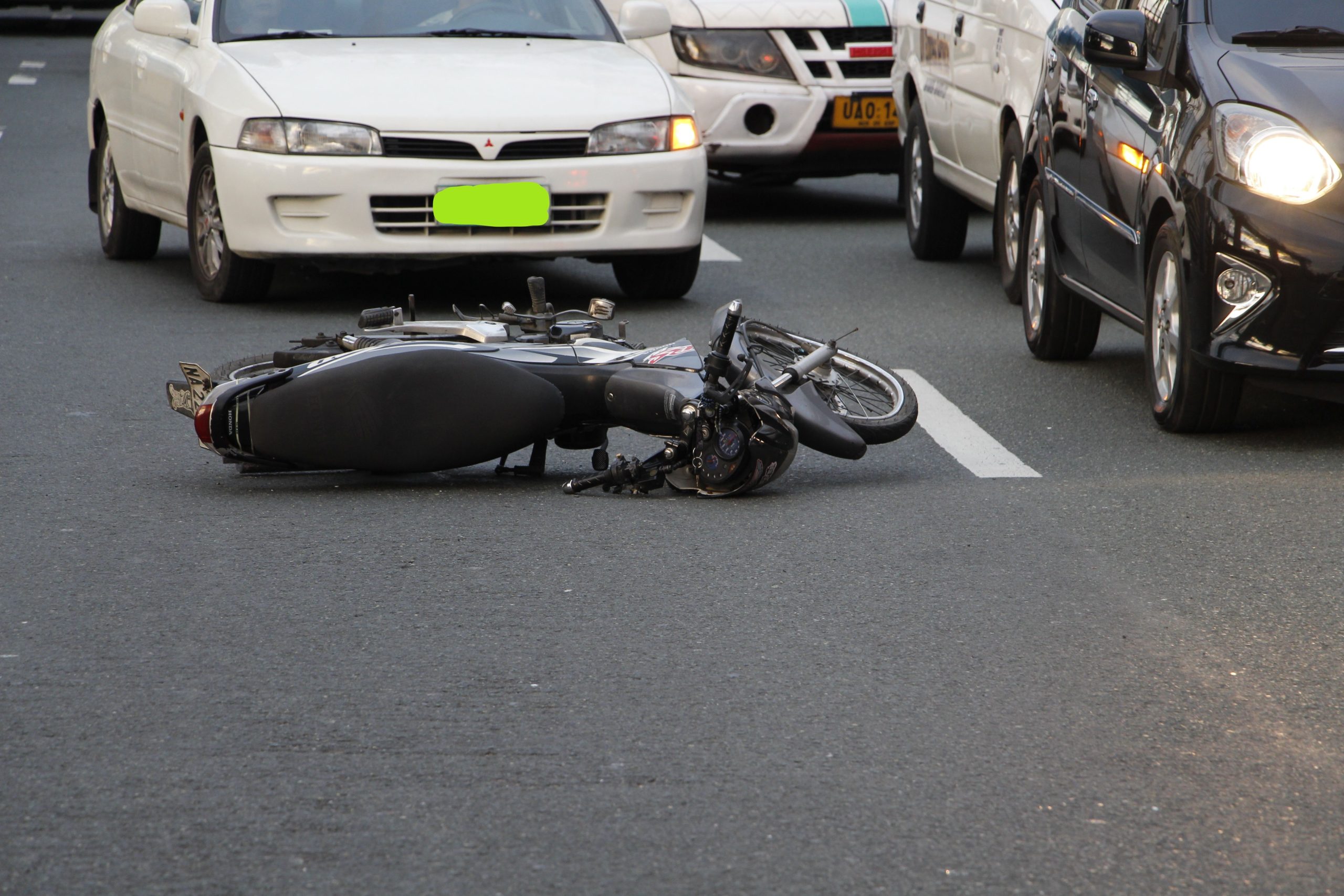
Few things communicate the severity and mechanics of a crash as clearly as photographs taken at the scene. If a rider is physically able to do so immediately after a collision, or has someone else do it on their behalf, capturing the scene before vehicles are moved or debris is cleared can make a significant difference later on.
Useful scene evidence typically includes:
- Wide shots of the entire crash scene, including lane markings, traffic signals, and road conditions
- Close-up images of vehicle damage from multiple angles
- Photos of skid marks, debris fields, and the final resting position of each vehicle
- Images of visible injuries, torn or damaged riding gear, and a damaged helmet
- Weather and lighting conditions at the time of the crash
Physical evidence such as a cracked helmet, a bent motorcycle frame, or torn leathers can also be preserved and later examined by an accident reconstruction expert. This kind of tangible proof is difficult for an insurance company to dispute, unlike testimony that can be characterized as biased or unreliable.
Eyewitness Accounts and Their Value in a Claim
Independent witnesses who saw the crash unfold can corroborate a rider’s version of events, particularly when the other driver disputes fault. Because witness memories fade quickly and contact information is easy to lose track of, collecting names and phone numbers at the scene, or shortly after, is one of the more time-sensitive steps in building a claim.
A written or recorded witness statement, ideally taken close to the time of the crash, tends to carry more credibility than a recollection offered months later. Passengers, pedestrians, nearby business owners, and even other drivers who were not directly involved can all provide perspective that strengthens the overall narrative of how the collision occurred.
Police Reports and Official Crash Documentation
When law enforcement responds to a motorcycle crash, the resulting police report becomes one of the foundational documents in the claim. Officers typically record statements from both parties, note any citations issued, document road and weather conditions, and sometimes include a preliminary opinion on fault.
While a police report is not automatically treated as conclusive proof of liability, insurance companies and courts give it substantial weight. Riders should request a copy of the report as soon as it becomes available and review it carefully for accuracy. If any details are incorrect, such as a misidentified vehicle or an inaccurate description of the impact point, it is worth asking the reporting agency about the process for submitting a correction or an amended statement.
What National Crash Data Reveals About Motorcycle Risk
Beyond the specifics of any single crash, broader crash statistics help explain why motorcycle claims are handled differently than typical car accident claims and why thorough evidence gathering matters so much for riders.
According to the National Highway Traffic Safety Administration, the fatality rate for motorcyclists in 2023 reached 31.39 deaths per 100 million vehicle miles traveled, a figure the agency describes as nearly 28 times higher than the fatality rate for passenger car occupants during the same period. The agency has pointed to this gap as justification for its ongoing public safety campaigns urging drivers to watch more closely for riders sharing the road. This disparity illustrates a central reality of motorcycle litigation: because the physical consequences of a crash are so much more severe for a rider than for someone protected by a vehicle frame, the resulting injuries and damages tend to be correspondingly larger, and insurers tend to scrutinize these higher-value claims more aggressively.
Separately, the Insurance Institute for Highway Safety reports that in 2023, roughly 65 percent of motorcyclist deaths occurred in crashes involving multiple vehicles, while about 35 percent occurred in single-vehicle incidents. Taken together, these two data points paint a useful picture for claimants: most fatal motorcycle crashes involve another vehicle, which means liability disputes with another driver’s insurer are the norm rather than the exception, and the severity gap identified by federal data means those disputes often involve significant compensation. In practical terms, this combination is exactly why documentation of fault, from scene photos to eyewitness accounts, carries outsized importance in motorcycle cases compared to many other types of vehicle collisions.
Because most fatal and serious motorcycle crashes involve a second vehicle, and because injury severity for riders tends to be disproportionately high, claims adjusters frequently look for any justification to shift blame toward the rider. A well-documented evidence file is the most effective way to counter that tendency.
Medical Records and Treatment Documentation

Medical documentation serves two purposes in a motorcycle accident claim. First, it establishes a clear link between the crash and the injuries being claimed. Second, it provides the factual basis for calculating damages, including past and future medical expenses, lost income, and compensation for pain and suffering.
A thorough medical record trail generally includes:
- Emergency room or urgent care records from the day of the crash
- Diagnostic imaging such as X-rays, CT scans, or MRIs
- Records from follow-up visits, physical therapy, and specialist consultations
- Prescription and treatment histories
- Written prognosis notes addressing long-term limitations or permanent impairment
Gaps in treatment can be used by insurers to argue that an injury was not serious or was caused by something other than the crash. For this reason, seeking legal and medical help after an injury without significant delay helps protect both a rider’s health and the integrity of the claim. Consistent follow-through with prescribed treatment plans, and keeping records of every appointment, strengthens the connection between the collision and the injuries being claimed.
Digital Evidence: Traffic Cameras, Dash Cams, and Cell Phone Data
Digital records have become some of the most persuasive evidence in modern crash claims, largely because they are difficult to dispute or misremember. Traffic and intersection cameras, business surveillance footage, and dash cam recordings from nearby vehicles can capture the moments before, during, and after a collision with precision that no witness statement can match.
Because many businesses and municipalities overwrite footage within days or weeks, requesting this material early is important. Riders or their representatives should identify nearby cameras as soon as possible and send preservation requests before the recordings are lost. Cell phone records can also play a role, particularly when there is reason to believe the other driver was distracted at the time of the crash. In some cases, vehicle event data recorders, sometimes referred to as black boxes, can provide objective data on speed, braking, and steering input in the seconds leading up to impact.
Expert Analysis and Accident Reconstruction
For claims involving disputed fault, catastrophic injuries, or significant damages, an accident reconstruction expert can be brought in to analyze the physical evidence and recreate the sequence of events. These professionals combine scene measurements, vehicle damage patterns, skid mark analysis, and sometimes computer modeling to produce an objective account of how the crash occurred.
Medical experts may also be asked to testify about the long-term impact of an injury, particularly in cases involving traumatic brain injury, spinal cord damage, or amputation, all of which occur at elevated rates in motorcycle crashes due to the lack of a protective vehicle frame. Expert testimony carries significant persuasive weight in negotiations and, if necessary, in court, because it is grounded in technical analysis rather than personal recollection.
Documenting Financial Losses and Damages
Evidence of financial harm is just as important as evidence of fault. Riders should keep organized records of every cost associated with the crash, since these figures form the basis of a damages calculation.
Relevant financial documentation often includes:
- Pay stubs or tax records showing lost wages and missed work
- Repair or replacement estimates for the motorcycle and riding gear
- Receipts for medical equipment, home modifications, or in-home care
- Mileage logs for travel to medical appointments
- A personal journal noting pain levels, emotional impact, and limitations on daily activities
This last item, a simple record kept in the rider’s own words, is often underused but can be highly effective in illustrating the non-economic toll of an injury, particularly when a claim eventually involves a discussion of pain and suffering.
Recognizing When Professional Guidance Becomes Necessary
Not every motorcycle accident claim requires an attorney, but many do, particularly once an insurance company begins disputing liability or downplaying the extent of an injury. Some of the most common situations that require legal help include crashes involving a severely injured rider, disputes over who caused the collision, a lowball settlement offer that does not reflect actual medical costs, or a case where the other driver was uninsured or underinsured.
An attorney can also be valuable simply for managing the evidence-gathering process itself. Sending preservation letters for camera footage, formally requesting complete medical records, and coordinating with accident reconstruction or medical experts are all tasks that benefit from legal experience, especially while a rider is still recovering from injuries.
The Bottom Line
No single piece of evidence wins a motorcycle accident claim on its own. Scene photographs establish what the crash scene looked like, witness statements and police reports support the account of how it happened, medical records connect the crash to specific injuries, and financial documentation quantifies the resulting losses. Digital footage and expert analysis fill in gaps that other evidence cannot address, particularly in disputed liability cases.
Riders who approach the aftermath of a crash methodically, gathering and preserving evidence as early as possible, put themselves in a far stronger position when it comes time to negotiate with an insurance company or, if necessary, pursue a claim in court. Given how quickly some evidence can disappear, from surveillance footage to fading witness memories, early and thorough documentation remains one of the most important steps a rider can take after a motorcycle accident.